Climate Action Now (CAN)
CAN Summit 2022 - Council CAN - CAN Team
211 views
Council CAN session
Stockport CAN Summit 2022
View transcript
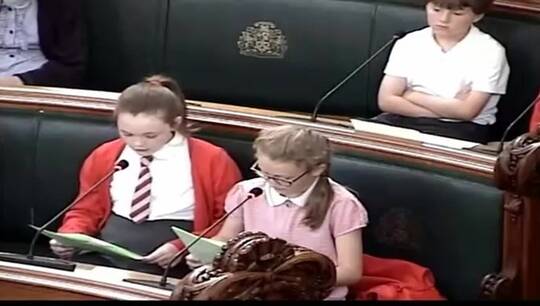
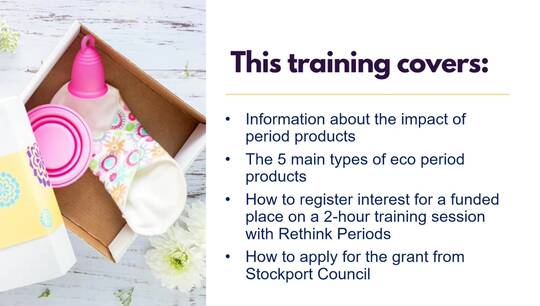
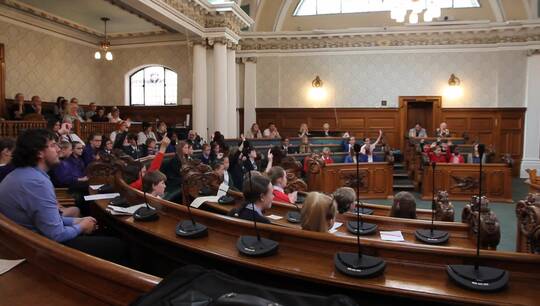
[Nick] Well, I'm Nick Leslie. I'm the head of Climate Action Now at Stockport Council. As you'll see that nice little selfie I took. So I just really wanted to sort of build on what Caroline was saying there because she mentioned our ambition for the council's operations and provision of services to be net zero by 2030. So I suppose what does that mean to be to be net zero? If you were at the last summit last year, we spoke about the different types of classifications for greenhouse gas emissions. So I'm going to get a little bit technical now to sort of explain what next year is all about and how it applies to the council. Essentially, scope one emissions are the fuel that the council actually burns in its operations. So that would be gas in boilers. That would be diesel, petrol, that kind of thing in our fleet. So that's why it's called scope one because it's direct emissions that we're producing. Scope two emissions are the emissions that arise from the use of our electricity, so it's obviously been burnt in a powerstation, fossil fuels, that kind of thing, down the down the cables. But we're pretty much directly responsible for that. So those are scope one and two emissions. Scope three emissions, which tend to be the lion's share of any organisations' footprint, are a little bit trickier because that includes things like the procurement supply chain, business travel, staff commuting, and emissions arising from the delivery of services or products of that particular organisation. So, actually, to be fair, it could include the emissions arising from, say, for instance, the social housing stock, so people's own electricity bills, gas, that kind of thing. So that's quite hard to measure. So in order to develop our net zero ambition, we have to obviously start by measuring what's going on in terms of the council's greenhouse gas emissions. So at the moment, we've already done that for scopes one and two emissions, and we've done that all the way back to 2018. So we've got a record there and can sort of see what progresses and track that, and that will help us set our targets. Scope three emissions, as I mentioned, a little bit trickier, to quantify, we'll probably have to get into estimations until we can develop ways to monitor emissions arising from a supply chain and from the provision of our services. But net zero requires a definition or a specific boundary, what is included in that target to get to a net zero position. So obviously it's going to include scopes one and two, and there'll be elements of scope three, which will be made immediately be able to include in that target. But that's work that we need to keep working on. And obviously we want to be open and transparent about that, and so that will be laid out in due course. But once we've got across the measuring side of things which we've done with scopes one and two emissions, we can then set our science based targets to meet our deadline of the ambition of being net zero by 2030. And obviously we'll continue to monitor and report on progress to that target. So that's very much the intention of the council to be publicly putting those emissions out there in the public domain. So this 2030 target sits very much alongside or under the umbrella of the wider Greater Manchester target of carbon neutrality by 2038. But it's really important for the council to be an exemplar in this field, which is why we've said that our own in-house net zero target of 2030, so delivering sooner than the 2038 targets. So that's kind of a little bit of an update about where we're at with measuring our emissions at the council and setting our own science based targets. But much has been mentioned by Councillor Hunter and Caroline and Councillor Roberts, alongside this must come action to reduce these emissions. I could go through a long list of things that has happened already that we're planning to do, but I'd like to draw your attention to the newly refreshed Council's web pages for Climate Action Now. On there, you'll see, you'll find the annual report, which was published in June, which has a lot of detail about exactly what it is we're doing and what we're intending to do. That's something that I'd encourage you all to go and have a look at, a little bit of light bedtime reading. there. So it's clear that we're not meeting the need to cut carbon emissions severely, and we need to accelerate change. So it is clear we already know that. And as Councillor Hunter mentioned, things like the feasibility study for the large scale shared heating network in the town centre along the A6 corridor. Those kind of projects, large scale projects, are crucial to making a dent in in the carbon reductions that we need. So that's a really exciting project, and stuff like at that scale that we really, really need to get going quickly because those those kind of schemes take a long time to get in place, especially if we want to get to net zero by 2030 or carbon neutral by 2038. We're also looking at a smaller scale interventions, but on a wider scale, taking part in GMCA's Go Neutral scheme, which is essentially assessing all of the council's property and land and looking at opportunities for renewable energy interventions within those spaces and hopefully doing lots and lots of little different interventions, but will then add up to a much bigger picture. And as Councillor Hunter mentioned, we need to rapidly increase the electric vehicle charging infrastructure across the borough. So that's something we're actively working on as we speak. So, mitigating our emissions, all of that work really important. But unfortunately, we have to start planning for climate change which is already baked in. I'm just going to shift on to the next slide. I think there's a little button here. I need to do that one. It's just that sorry. There you go. That's it. Took these snaps on holiday. No, I didn't. These are just some snaps from Italy. You may know that there's a there's a severe drought going on in Italy at the moment, and you'll see these dry riverbeds. So yeah, it's it's coming. It's baked in. Climate change is happening. I'll just click to the next one, a little closer to home. This is Dovestone Reservoir in Saddleworth, so you can see this is coming. It's already here with the announcement today of the extreme weather warnings for next week. I think it's sort of imperative that we need to start planning for what's coming down the line with climate change. I thought it was interesting to hear the other day, actually, in the news that some councils down south are already spreading grit and sand on the roads where it's starting to melt. And I know that Stockport Council next week, actually, when the heat warnings are in place, they're actually restructuring and shifting operations around waste collection. so the bin collections will start an hour earlier on those days when heat warnings are in place. Obviously, the operatives don't have to work in the heat of the day, but it's just things like that, unintended consequences, that we need to start planning for with the effects of climate change. Anyway, it's evident that the council has a role to play, but it will require everyone to meet this 2038 target: businesses, residents. So I see one of the key roles that the Council can take on is one of a catalyst, an influencer. And that is why the council's engagement work is so important. So I would like to introduce Liz, who will talk a little bit more about what the council is doing from an engagement perspective. So over to you. [Liz] I'm going to give you an absolute whistle stop tour through climate engagement at the council so that we can have a break. So internally, climate engagement starts with our carbon literacy. And, as we've said, that's aimed at council colleagues, all of our senior leadership have already done that training and we will be rolling it out to Members as well. Other areas that we're working working on. So if you are a resident or part of a community group, you can get involved by joining our green network. So if you're interested in climate and environment and might like to come along, this is part of our work with Sector3 and with voluntary, community, faith and social enterprise networks, you can get involved by emailing us at stockportCAN@stockport.gov.uk. With that group, we're going to be developing a community-based carbon literacy offer to make carbon literacy available to our communities to easily access, and you can apply for the Stockport CAN Fund. This is a fund set up to support community-led projects that help to tackle climate change. There's lots of different areas. You can apply for things like energy saving, mending and repairing, walking and cycling, food growing and cooking. If you're a business, you can get involved with our Climate Action Business Forum. If you go to Eventbrite and search for Climate Action Business Forum, you can book on to our next meeting, which is in September and again with businesses we're working to set up a pilot project. We're running a pilot project that will happen this autumn. We're making a carbon literacy course that small SMEs and micro businesses can access that carbon literacy training. So if you are, we're working with big businesses on this, if you're a small business who might like to do the training, please do get in touch with us. We're not gonna have time to watch this video of the School's Climate Assembly debate, but we will send it to you all in the email afterwards. This shows the young people in our council chambers debating their climate action ideas that they think that Stockport Council should take, and as part of their debate, they voted to support to make eco friendly, biodegradable and reusable period products more affordable and accessible in schools. So if you're a school or college or a group of young people, you can get involved by signing up to the Schools Climate Assembly 22/23. You can register your schools' or colleges' interest in eco period products support, and you can apply for the Stockport CAN Fund as well. Okay, that wraps up our first session. That was a real whistle stop tour, and we'll hopefully speak to lots of you in the breaks. But we will re-join at 1:20 for our session on energy. Thank you.